
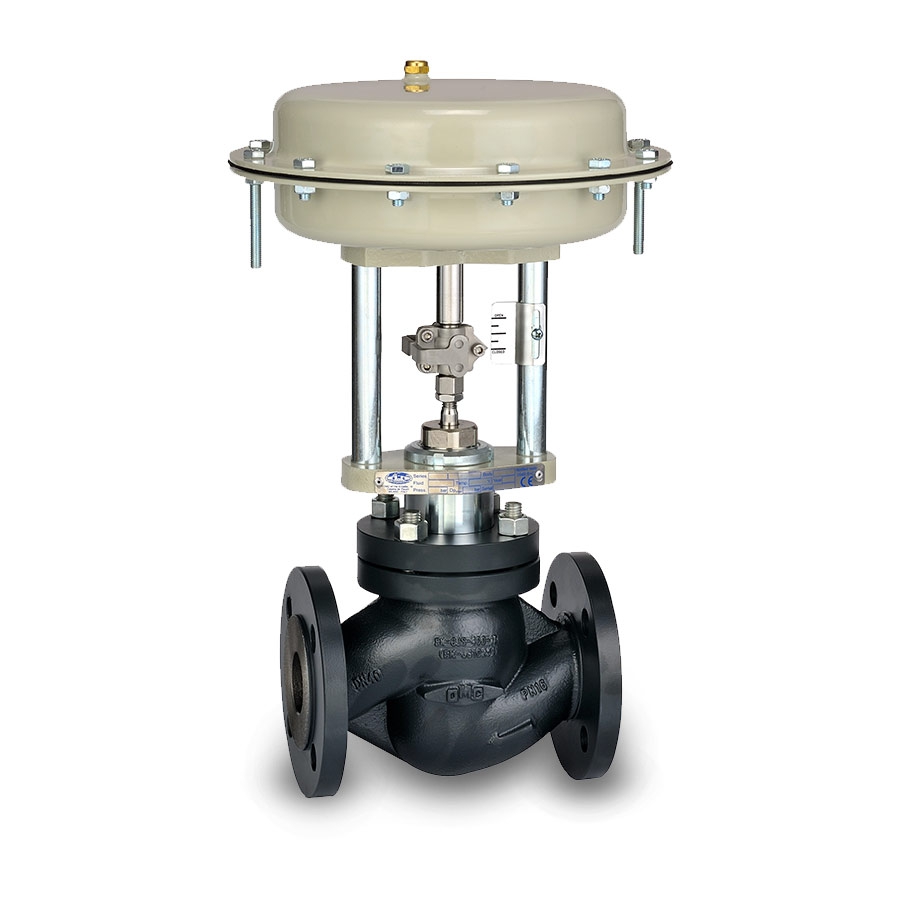
What Is a Differential Pressure Control Valve?
Differential pressure is the difference between the inlet and outlet pressure of a fluid in a system or circuit. In any system with flowing media, changes in flow rate cause the differential pressure to change. If it rises too high, pumps, valves and terminal units can be damaged, noise increases and the system no longer operates as designed.
A differential pressure control valve (DPCV) detects these changes and automatically keeps the pressure difference at a set value. By limiting the differential pressure, it ensures that flow cannot exceed the desired rate, which helps reduce energy consumption and noise and simplifies commissioning of the system.
Working Principle
The valve is designed to keep the difference between inlet and outlet pressure at the required level. When the difference rises above the set value, the pilot system responds to the pressure acting on it and the main valve moves to reduce the differential pressure back to the set point. The pressure difference can change in either direction, whether the inlet pressure or the outlet pressure increases, and in both cases the valve operates its mechanism to restore the required value. The valve is self-acting and adjustable, so it can be set to the value required by the installation.
Differential Pressure Control Valve Types
- Automatic differential pressure control valve: detects pressure differences in the process and intervenes automatically, keeping the system protected around the clock.
- Manifold (collector) differential pressure control valve: maintains a stable differential pressure across a distribution manifold and its branches.
- Flow-limiting differential pressure control valve: prevents differential pressure caused by sudden flow changes and limits the flow rate, protecting the piping system.
- Dynamic balancing differential pressure control valve: detects and stabilises the differential pressure caused by changing flow, slowing the flow when it increases to maintain balance between inlet and outlet.
Technical Range
Luna Flow Control supplies differential pressure control valves in cast iron, ductile iron, steel, stainless steel and special materials, with flanged or threaded connections. The range covers nominal sizes DN 15 – 100, nominal pressures PN 16 – 40 and operating temperatures from -200 °C to +550 °C.
What Does a Differential Pressure Control Valve Do?
The valve balances the differential pressure in the installation by keeping the pressures throughout the system stable. Its most important benefit is preventing damage to process equipment: pumps, valves, units and machines can all be damaged by excessive differential pressure, and severe damage can bring the entire system to a stop.
Application Areas
- Central heating and cooling systems
- HVAC distribution circuits and manifolds
- District heating networks
- Industrial process lines with variable flow
Advantages
- Automatic, self-acting operation
- Protects pumps, valves and terminal units
- Stabilises flow and reduces noise
- Lowers energy consumption
- Simplifies system balancing and commissioning
Selection Tips
Define the required differential pressure set range, the flow rate, the medium and its temperature, and the connection type before selecting a valve. Correct sizing ensures stable control across the full operating range of the system.


