
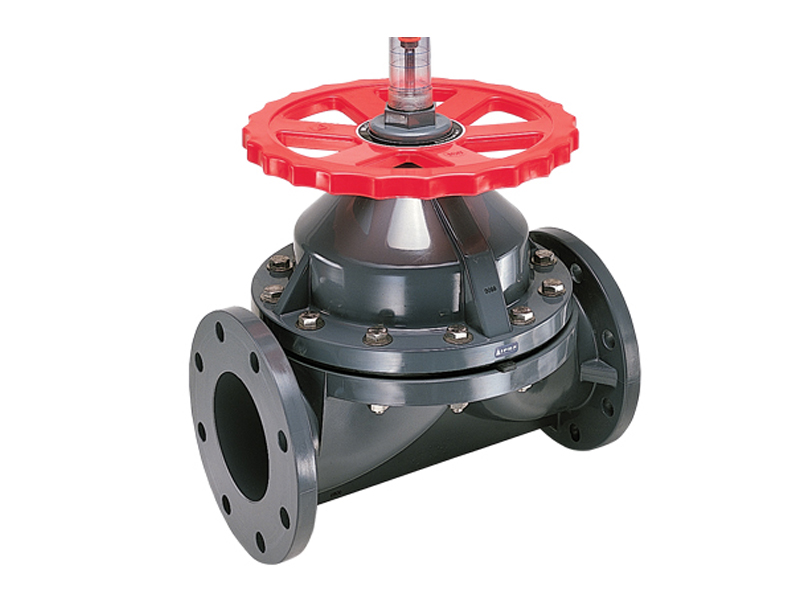
What Is a Diaphragm Valve?
A diaphragm valve, also known as a membrane valve, controls flow by pressing a flexible diaphragm against a seat or weir in the valve body. The diaphragm separates the flowing medium from the stem and the operating mechanism, so the medium never comes into contact with moving parts or lubricants. This makes the diaphragm valve an excellent choice for aggressive, abrasive, particle-laden and hygienic fluids.
Diaphragm valves offer a high level of sealing, contain no dead volume and are self-draining. They can be used in both flow directions and are widely preferred in low-pressure applications and wherever difficult fluids must be controlled safely.
Working Principle
When the valve is operated, the stem moves a compressor that pushes the diaphragm down onto the seat or weir, closing the flow path. When the stem is raised, the diaphragm lifts and the medium passes through. Intermediate positions allow the flow to be throttled. The valve can be operated manually by a handwheel, through a gearbox, or automatically with an electric or pneumatic actuator, allowing remote control of both flow regulation and complete shut-off.
Diaphragm Valve Types
- Stainless steel diaphragm valve: compact and easy to use, the right choice for corrosive applications and chemical plants.
- PVC diaphragm valve: lightweight and resistant to chemicals and corrosion; suitable for corrosive and particle-laden liquids. Adjustable travel stops prevent the diaphragm from being over-compressed.
- Weir type diaphragm valve: suitable for general service and corrosive fluids, with excellent sealing, easy maintenance and a pocket-free design that keeps the medium clean.
Materials, Membranes and Linings
Luna Flow Control supplies diaphragm valves with cast iron, ductile iron, steel or stainless steel bodies. The diaphragm is available in Butyl, EPDM, Viton, Hypalon or PTFE, and the body can be lined with PTFE, Halar or Butyl for protection against aggressive chemicals. The range covers DN 15 – 400 (1/2″ – 16″) and PN 10 – 40 / Class 150 – 300, with flanged or threaded connections.
What Does a Diaphragm Valve Do?
Because the operating mechanism is isolated from the medium, highly corrosive chemicals cannot damage it, and lubricants cannot contaminate the process fluid. Viscous and particle-laden media that block or wear other valve types cannot enter the bonnet. As a result, diaphragm valves provide reliable, leak-free on-off and throttling service for many years.
Application Areas
- Demineralised water systems
- Corrosive applications and chemical plants
- Nuclear installations
- Dirty water and air applications
- Biotechnology and fermentation facilities
- Food industry and breweries
- Pharmaceutical systems
Advantages
- Medium fully isolated from the operating mechanism
- Leak-tight sealing without dead volume
- Self-draining, hygienic design
- Suitable for corrosive, abrasive and particle-laden media
- Simple maintenance: the diaphragm is the main wear part
Selection and Maintenance
Select the diaphragm and lining material according to the chemical composition and temperature of the medium. Check the diaphragm regularly and replace it as part of routine maintenance to keep the valve sealing reliably.


